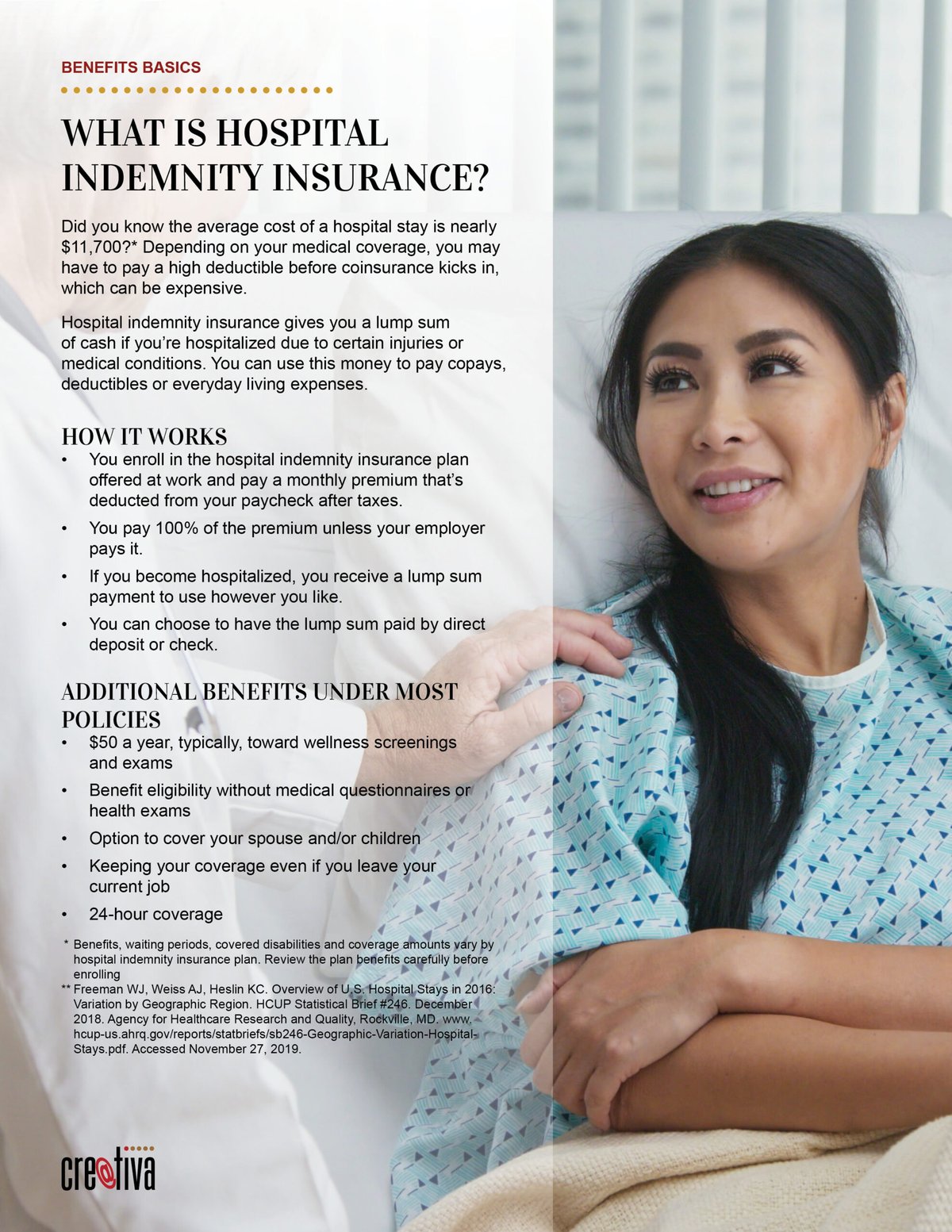
Imagine facing a sudden medical emergency, a planned surgery, or even the joyous arrival of a new baby – all events that could lead to a hospital stay. While your primary health insurance might cover a significant portion, you're still left with deductibles, copays, coinsurance, and a host of other expenses that can quickly add up. This is where the often-misunderstood, yet incredibly valuable, hospital indemnity insurance steps in. It's a supplemental safety net designed to provide you with a fixed cash benefit when you're hospitalized, offering a layer of financial protection directly to you, the policyholder, to ease the burden during a vulnerable time.
Let's demystify this critical coverage and explore how it can fit into your financial wellness strategy.
At a Glance: Hospital Indemnity Insurance
- What it is: A supplemental insurance plan that pays fixed cash benefits directly to you for each day you're hospitalized.
- What it covers: Inpatient stays due to illness, injury, or childbirth. Some plans extend to observation, ER visits leading to admission, post-hospital recovery, ambulance, and rehabilitation.
- How it helps: Benefits can be used for out-of-pocket medical costs (deductibles, copays), lost wages, transportation, medications, home care, or household expenses.
- Key feature: Pays directly to you, regardless of other insurance payouts; has no deductibles, coinsurance, or network restrictions like traditional health insurance.
- Who it's for: Individuals with high-deductible plans, chronic conditions, those planning major procedures or pregnancy, or anyone seeking added financial peace of mind.
What Exactly Is Hospital Indemnity Insurance? Your Cash Lifeline During a Hospital Stay
At its core, hospital indemnity insurance is a supplemental health plan, meaning it's designed to complement, not replace, your primary medical insurance. Unlike your major medical plan, which typically pays hospitals and doctors directly for services, a hospital indemnity policy pays fixed cash benefits directly to you, the policyholder. This payment is triggered by a qualifying hospital stay, and it's paid out based on a pre-determined amount per day, or sometimes as a lump sum for specific events like an ICU admission or surgery.
Think of it as a safety net that catches the costs your traditional health insurance might miss, or simply helps you manage the financial disruption of being out of work or needing extra help. The beauty of this direct payment is its flexibility: you decide how the money is spent.
How Hospital Indemnity Insurance Works: From Admission to Payout
Understanding the mechanics of your policy is crucial. Here’s a closer look at what you can expect when you have hospital indemnity coverage.
Cash Benefits: What You Can Expect
When you're hospitalized, your policy kicks in to provide a pre-set amount of money. Daily benefits typically range from $100 to $500, though some robust policies might offer up to $1,000 per day. Beyond daily rates, some plans include lump-sum payments for specific, more intensive events, such as an admission to the Intensive Care Unit (ICU) or certain surgical procedures. This cash goes straight to you, offering financial breathing room when you need it most.
Covered Circumstances: When Your Policy Pays Out
Generally, hospital indemnity insurance covers inpatient hospital stays resulting from an illness, an injury, or childbirth. But coverage often extends beyond these basic scenarios. Many plans also include benefits for:
- Observation stays: When you're kept in the hospital for monitoring but not formally admitted.
- Emergency room visits: Specifically, those visits that lead directly to an inpatient hospitalization.
- Post-hospital recovery care: Support after you've left the hospital, such as home health services.
- Ambulance transportation: When you need emergency transport to a medical facility.
- Skilled nursing facility stays: For continued care after a hospital discharge.
- Rehabilitation services: If you require therapy or rehabilitation following a hospital stay.
It's important to remember that policies vary, so always review the specific terms of your chosen plan.
What It Doesn't Cover (And Why That's Okay)
Because it's designed to cover hospital-related events, hospital indemnity insurance generally does not cover routine doctor visits, diagnostic tests, or outpatient procedures that don't result in an inpatient stay. This isn't a flaw; it's simply a reflection of its specialized purpose. Your primary health insurance is designed to handle those everyday medical needs.
Key Differences from Your Primary Health Plan
One of the most defining characteristics of hospital indemnity insurance is how it operates distinctly from your traditional health insurance.
- No Deductibles, Coinsurance, or Network Restrictions: Unlike most major medical plans, you won't encounter deductibles to meet, coinsurance percentages to pay, or limitations based on a provider network. The benefit payment is usually straightforward once a covered event occurs.
- Direct Payment to You: The cash benefit is paid directly to you, not to the hospital or doctors. This means you have full control over how you use the funds, whether it’s for medical bills, rent, groceries, or child care.
- Coordinates with Other Coverage: The benefits you receive from a hospital indemnity plan do not reduce or offset payouts from your primary health insurance. In many cases, if your policy terms allow it, you can even collect payouts from multiple indemnity policies if you have them. This means you can stack the benefits to maximize your financial protection.
Protecting Your Entire Family
Many hospital indemnity policies offer the option to extend coverage to your spouse and dependent children. This can be a cost-effective way to ensure that your entire family is protected, providing peace of mind knowing that an unexpected hospitalization for any family member won't derail your finances.
Who Needs This Extra Safety Net? Assessing Your Risk and Budget
Hospital indemnity insurance isn't for everyone, but for certain individuals and families, it can be an invaluable financial tool. Consider if you fall into any of these categories:
- Individuals with High-Deductible Health Plans (HDHPs): If you have an HDHP, you know that a significant hospital stay could mean paying thousands out of pocket before your primary insurance truly kicks in. Hospital indemnity benefits can help cover that deductible, saving you from a major financial hit.
- Those with Chronic Conditions: If you manage chronic illnesses like heart disease, diabetes, or autoimmune disorders, you face a higher likelihood of needing periodic hospitalization. This coverage can provide crucial support for anticipated (or unanticipated) stays.
- Individuals Planning for Procedures or Pregnancy: If you have an upcoming surgery, a planned medical procedure, or are expecting a child, you can often anticipate a hospital stay. This policy can help budget for those known expenses and provide funds for related needs.
- Anyone Desiring Extra Coverage for Accidents: Accidents happen, and they can lead to unexpected hospitalizations. An indemnity plan offers a buffer against the financial fallout of an unforeseen injury.
- Those Anticipating Out-of-Network Care: If your primary health plan has limited networks or you foresee needing care from an out-of-network specialist, hospital indemnity benefits can help bridge the gap in coverage or high out-of-network costs.
- Individuals Seeking Peace of Mind: For many, the greatest benefit is the peace of mind that comes from knowing you have an extra layer of protection against potential medical debt, allowing you to focus on recovery rather than financial worry.
Navigating Policy Terms: What to Look For Before You Buy
Choosing the right hospital indemnity policy requires a careful review of its terms and conditions. These details will significantly impact your coverage and cost.
Eligibility and Health Status
Most insurers offer coverage to individuals between 18 and 64, though some may extend eligibility to older applicants. Be aware that benefits might be reduced at certain ages, often around 70.
For individual policies, insurers may require you to disclose your medical history or undergo simplified underwriting. This helps them assess risk.
Pre-Existing Conditions and Waiting Periods
A critical consideration is how policies handle pre-existing conditions. Some insurers may exclude individuals with chronic illnesses entirely. Others might impose waiting periods—typically 6 to 12 months—during which benefits won't apply for conditions diagnosed or treated within a specified timeframe (often 6 months to 2 years) prior to purchasing the policy. Always understand these clauses to avoid surprises.
Benefit Period and Limits
Every policy defines a benefit period, which dictates how long payments continue for a single hospital stay. This could be capped at a set number of days (e.g., 10, 30, or even 365 days). Policies may also impose annual or lifetime limits on the total benefits you can receive. These limits are essential to know, as they determine the maximum financial protection available.
Premiums: Understanding the Cost
The cost of hospital indemnity insurance varies, but for individuals, monthly premiums typically range from $10 to $50. Several factors influence this cost:
- Your age: Older individuals generally pay higher premiums.
- Benefit levels: Higher daily payouts or lump sums mean higher premiums.
- Your location: Geographic location can impact costs.
- Optional riders: Any extra coverage you add will increase the premium.
- Group vs. Individual Plans: If you can get coverage through an employer, group plans often offer lower rates than individual policies.
Filing a Claim: Getting Your Benefits When You Need Them
The process of filing a claim is straightforward, but it requires attention to detail.
Required Documentation
To process your claim, the insurer will typically ask for:
- A completed claim form provided by the insurance company.
- An itemized hospital bill detailing your stay.
- Admission and discharge records from the hospital.
- A physician’s statement confirming your hospitalization and diagnosis.
Keeping meticulous records of your hospital visit will streamline this process.
Timelines for Submission and Processing
Most policies require you to submit your claim within a specific timeframe, commonly 90 to 180 days from the date of hospitalization. Once submitted, insurers generally process claims within 10 to 30 business days. Knowing these timelines can help you manage expectations for when you’ll receive your benefits.
Working with Your Other Insurance: A Harmonious Relationship
One of the great advantages of hospital indemnity insurance is its ability to coordinate with your other health coverage without conflict. Because benefits are paid directly to you, they do not reduce or offset payouts from your primary health insurance. This means you can use the hospital indemnity funds to cover your deductibles, copays, or even non-medical expenses while your primary insurance pays the hospital and doctors.
In fact, if your policy allows, you can collect payouts from multiple indemnity policies. This "stacking" of benefits can provide an even more robust financial safety net during a significant medical event.
Keeping Your Policy Active: Avoiding Lapses
Maintaining continuous coverage is important. If you miss premium payments, your policy can lapse after a grace period, which is typically 30 to 60 days. Should your policy lapse, you may need to reapply for coverage, which could involve new underwriting and potentially higher premiums. Some policies offer nonforfeiture provisions, which means you might receive limited benefits if you stop paying premiums after a certain period, but this is less common with indemnity plans. It's always best to ensure your payments are current.
Is Hospital Indemnity Insurance Right for You? Key Questions to Ask
Before you commit to a policy, ask yourself these crucial questions. They'll help you evaluate whether hospital indemnity insurance aligns with your specific needs and financial situation.
- How quickly will I receive the payout? Understand the typical payment time after hospitalization. Some plans are quicker than others, which can be vital if you need immediate funds.
- What is the maximum length of coverage? Policies vary widely in the number of hospitalized days they cover—from just a few days (e.g., 1, 3-10 days) to extended periods (up to 15, up to 30 consecutive days), or even limits on separate hospitalizations per year. Ensure the limits meet your potential needs.
- Are there any waiting periods? Clarify if there's a waiting period before benefits become payable, especially for pre-existing conditions or even for new illnesses shortly after policy purchase.
- Do I need individual or family coverage? Evaluate if you need to protect just yourself, or if extending coverage to your spouse and children offers better value and peace of mind.
- Are there specific age restrictions? Be aware of any age limits for enrollment and if benefits reduce once you reach a certain age.
Considering these points will help you gauge the true value and suitability of hospital indemnity insurance for your circumstances. To delve deeper into whether this type of coverage makes sense for your individual situation, you might find it helpful to explore Should you get hospital indemnity insurance?.
Where to Find Coverage: Your Options for Purchasing
Hospital indemnity insurance is accessible through several channels, allowing you to choose the purchasing method that best suits your needs.
You can often purchase policies directly from various insurers. Well-known companies that offer this coverage include Aflac, Allstate, MetLife, Mutual of Omaha, and Protective (often through employer benefits). For individuals, other providers like Anthem, Cigna, Colonial Life, and UnitedHealthcare also offer plans.
Many employers offer hospital indemnity insurance as a voluntary benefit. This means you might be able to enroll through your workplace, often at lower group rates and with simpler underwriting requirements compared to individual policies.
There isn't a central marketplace for hospital indemnity insurance like there is for major medical plans under the Affordable Care Act. Instead, you can consult a licensed insurance agent who can help you compare policies from different providers, or you can inquire directly with your current health insurance provider, as they may offer supplemental plans.
Making an Informed Decision: Your Path to Greater Financial Security
Hospital indemnity insurance isn't a silver bullet for all your medical costs, nor is it a replacement for robust primary health insurance. However, it serves a vital role as a powerful supplemental tool, providing direct financial assistance when you're most vulnerable. By paying cash benefits directly to you, it offers flexibility to cover not just medical expenses like deductibles and copays, but also the myriad of indirect costs that arise from a hospital stay, such as lost income, childcare, or transportation.
As you consider your options, remember to weigh the potential benefits against your current health situation, your financial risk tolerance, and the specifics of your existing health coverage. Always scrutinize policy details, especially concerning pre-existing conditions, waiting periods, and benefit limits. With a clear understanding of what hospital indemnity insurance is and how it works, you can make an empowered decision to enhance your financial security and gain invaluable peace of mind.